
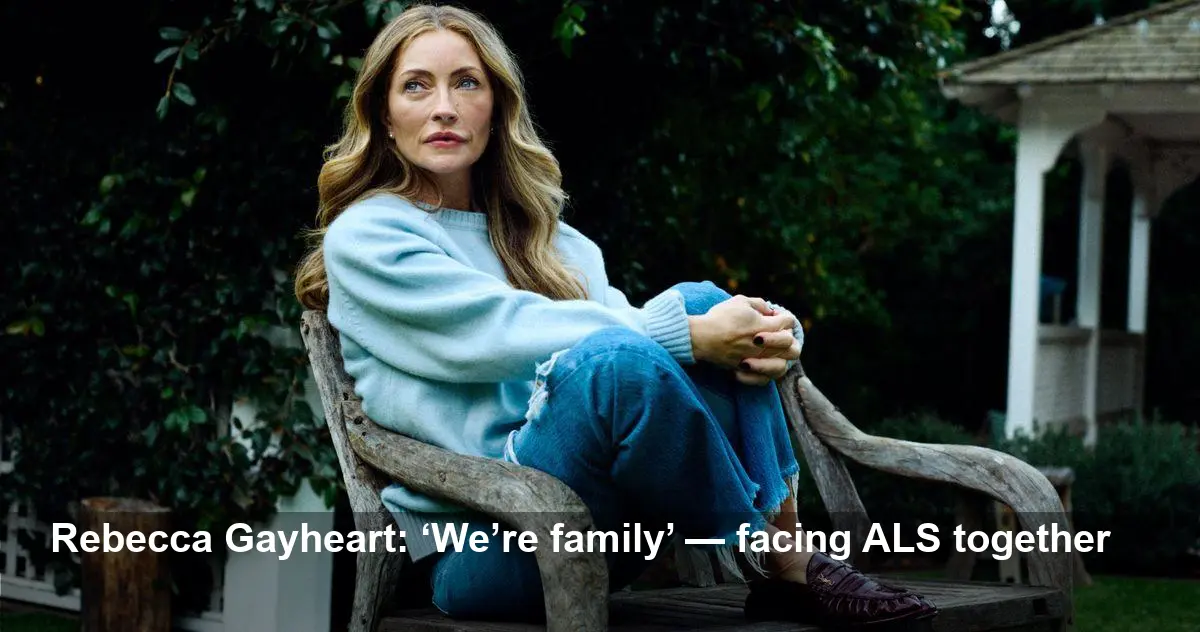
- Rebecca Gayheart says she and Eric Dane are “family,” not a couple, as they face his ALS diagnosis together.
- Dane received an ALS diagnosis after months of symptoms; Gayheart describes the moment she learned the news.
- Gayheart has taken on the role of a “care partner,” helping navigate medical decisions and supporting their children.
- The essay appears in The Cut’s “It’s Been a Year” series and details the family’s first steps after the diagnosis.
H2: Diagnosis in a closet call
Rebecca Gayheart recounts the moment she learned about Eric Dane’s ALS diagnosis. She was at home, taking the call from a closet to keep it private while her youngest daughter was nearby. Dane had flown to San Francisco to see a neurologist after experiencing symptoms for roughly a year — difficulty using his hand, dropping food, and trouble with fine motor tasks.
Gayheart recalls that initial disbelief and the shared tears on the phone. At first, she did not want to accept the possibility of ALS. She describes telling her daughter that everything was fine while still processing the gravity of the news.
H3: “We’re family,” not a couple
The essay makes clear that Gayheart and Dane are no longer a romantic couple; they separated in September 2017. Despite that, Gayheart says they remain family. That bond has shaped how they’re responding to the diagnosis: as co-parents and relatives, not as former partners drifting apart.
A week after receiving the diagnosis, Gayheart and Dane told their children. She emphasizes the need for careful, honest conversations and the emotional labor that goes into supporting a family through a life-changing medical prognosis.
H4: Becoming a care partner
Gayheart uses the phrase “care partner” to describe her role. She explains that the position involves practical caregiving and advocacy — sorting appointments, coordinating with medical specialists, and helping Dane navigate complex decisions.
Her essay highlights the emotional side of caregiving as well. Shock, grief, and determination coexist as she and Dane learn more about ALS and what the future might bring. Gayheart acknowledges that there is no cure and that learning the details of the disease has been part of the family’s difficult adjustment.
H5: What comes next
The piece outlines an early phase of response: medical consultations, conversations with children, and building a support system. Gayheart frames these steps as part of a family commitment to face the illness together.
The essay appears in The Cut’s “It’s Been a Year” series, where women reflect on what 2025 taught them. Gayheart’s first-person account centers on familial duty, the redefinition of relationships after separation, and the practical realities of caring for someone with a progressive neurological illness.
Her account underscores a broader message: that caregiving can fall to people who are not traditional spouses and that family structures adapt in the face of serious illness. Gayheart’s writing is personal and immediate, offering readers a clear window into the first days after a life-altering diagnosis.
Image Referance: https://www.thecut.com/article/rebecca-gayheart-caregiving-eric-dane-als-diagnosis.html