
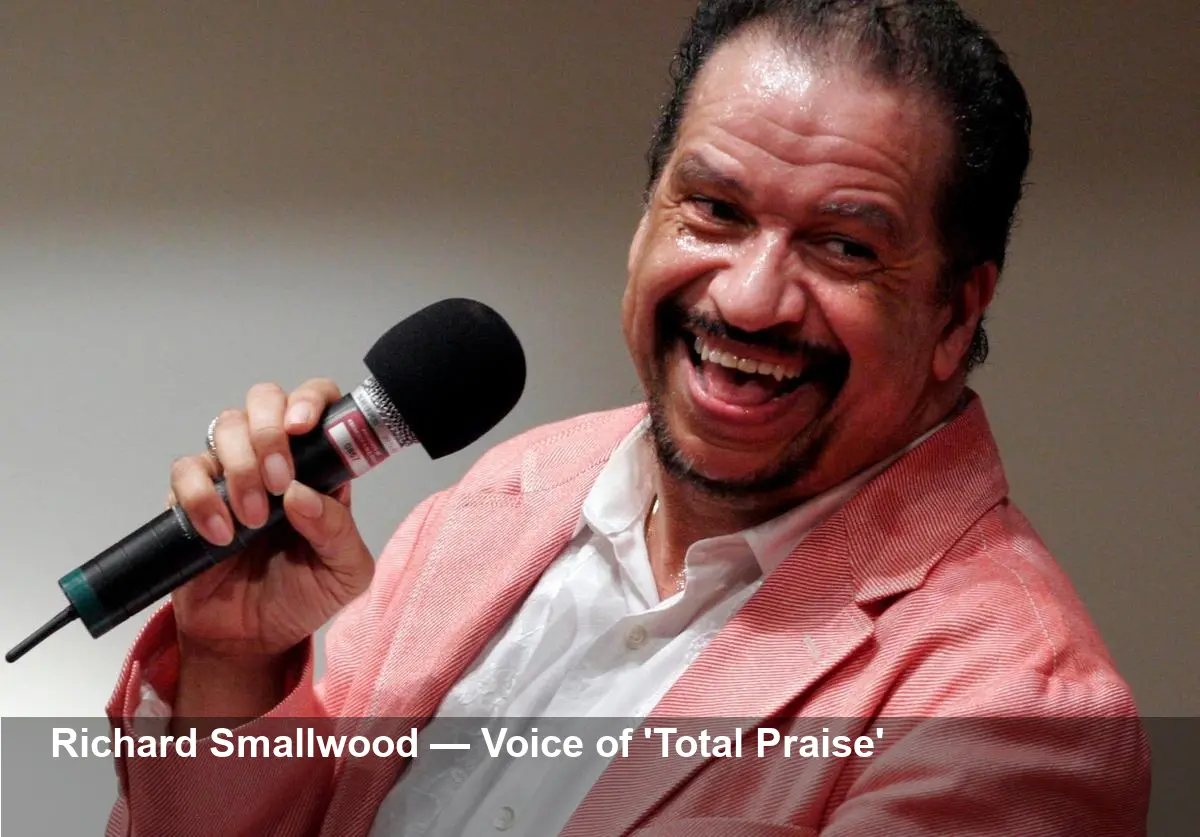
- Richard Smallwood, celebrated gospel composer and pianist, died Dec. 30 at 77 from complications of kidney failure.
- He wrote church standards including “Total Praise” and “I Love the Lord,” covered by Destiny’s Child, Whitney Houston and Stevie Wonder.
- Trained at Howard University, he earned eight Grammy nominations and was inducted into the Gospel Music Hall of Fame.
A towering voice in gospel
Richard Smallwood, whose soaring voice and classically informed piano shaped contemporary gospel for decades, died Dec. 30 at a nursing center in Sandy Spring, Maryland. He was 77. His publicist, Bill Carpenter, said the cause was complications of kidney failure.
Smallwood became one of the nation’s best-known gospel figures by writing deeply spiritual songs that bridged church tradition, classical technique and pop sensibility. He is perhaps best known for the choir staple “Total Praise,” released in 1996 with his group Vision, and for “I Love the Lord,” which Whitney Houston popularized on the soundtrack to The Preacher’s Wife.
Watch: Richard Smallwood — Total Praise
https://www.youtube.com/watch?v=jCjaUwEsMdQ
How faith and family shaped his music
Born Richard Lee Smallwood in Atlanta on Nov. 30, 1948, he moved to Washington at age 10 and grew up in a family anchored by Union Temple Baptist Church, where his stepfather was pastor. Smallwood learned piano in a precollege program at Howard University and later returned to earn a master’s in musicology and piano. He credited Johann Sebastian Bach for much of his classical grounding and said Motown and musical theater also influenced his songwriting.
Smallwood formed his first gospel group at 11 and later led the Richard Smallwood Singers and Vision. His 1982 debut, The Richard Smallwood Singers, spent 87 weeks on Billboard’s gospel chart; his follow-up, Psalms, brought his first of eight Grammy nominations.
Songs born of sorrow and praise
Many of Smallwood’s most enduring works came from personal struggle. He wrote “Total Praise” while caring for his mother, who had dementia, and a family friend with cancer. What he expected to be a “pity-party” song became an anthem of trust and gratitude, its climactic “Amen” section becoming a moment of solace for listeners across faiths and communities.
Critics and scholars noted that Smallwood’s music allowed room for pain as well as celebration. Musicologist Braxton Shelley said Smallwood’s songs make space for sorrow and healing as well as joy.
Honors, reach and legacy
Smallwood won Dove and Stellar awards, performed for presidents from Nixon to Clinton, toured the Soviet Union, and was inducted into the Gospel Music Hall of Fame in 2006. Artists from Destiny’s Child to Stevie Wonder drew on his songs, extending his reach beyond church walls.
He spoke candidly about struggles with depression in his 2019 autobiography, Total Praise, and described music as ministry. He never married and called his vocal ensembles his family. He is survived by two brothers and three foster sisters.
Even in sorrow, Smallwood’s music aimed to lift listeners. As he told The Washington Post, “This is not about making money. It’s about winning souls and encouraging people through Christ.” His songs remain fixtures in church choirs and concert halls, part of a legacy he hoped would last “after I’m gone.”
Image Referance: https://www.washingtonpost.com/obituaries/2025/12/30/richard-smallwood-dead-gospel/