
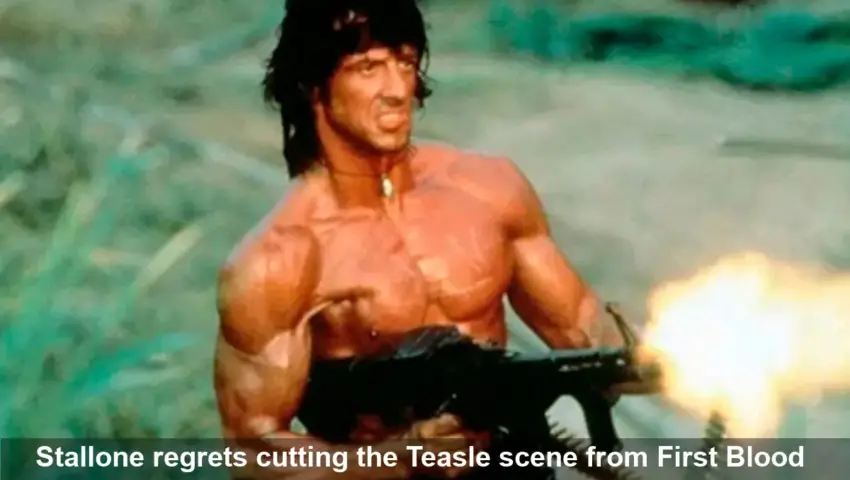
- Sylvester Stallone says he regrets cutting a scene from Rambo: First Blood that would have revealed Sheriff Will Teasle as a Korean War veteran.
- The deleted scene would have reframed the film as a clash between two scarred soldiers, not just a fugitive and a small-town lawman.
- Stallone trimmed violence and emphasized Rambo’s humanity, but acknowledges the cut removed moral complexity from the sheriff’s character.
Stallone’s late reflection on First Blood
Sylvester Stallone has publicly admitted he regrets removing a scene from the 1982 classic Rambo: First Blood. The scene, which would have revealed Sheriff Will Teasle (Brian Dennehy) as a Korean War veteran, was cut during production. Stallone now believes that omission simplified the film’s central conflict and cost it an additional layer of thematic weight.
The missing Teasle backstory
In early drafts, Teasle’s military past was meant to mirror John Rambo’s wartime trauma. Restoring that link would have framed the showdown as two veterans confronting their scars and the civilian pressures that followed. With the scene removed, Teasle operates more clearly as an authority figure and antagonist, reducing the moral ambiguity between the two men.
Stallone says the decision aligned with a broader push to soften the film’s violence and highlight Rambo’s humanity. The original novel by David Morrell paints Rambo as more violent; the film’s rewrite turned him into a tragic, misunderstood veteran pushed to extremes. But the deleted Teasle sequence, Stallone now admits, might have deepened both characters.
How the scene could have changed the film
If audiences had seen Teasle’s backstory, First Blood might have become a tighter study of post-war trauma across generations. The confrontation between Rambo and Teasle would read less like a fugitive-versus-lawman chase and more like a tragic collision between men shaped by different wars.
That shift would have altered viewers’ sympathy and added complexity to Dennehy’s character. Rather than a simple antagonist representing small-town authority or systemic failure, Teasle could have been seen as someone contending with his own unresolved wounds — and reacting defensively toward a figure who reminded him of his past.
Why Stallone cut the scene — and what he learned
Editing choices often balance pacing, tone, and audience accessibility. Stallone’s move to reduce explicit violence and humanize his lead helped First Blood reach broader audiences and become a cornerstone of action cinema. Still, his recent reflections underline the trade-offs filmmakers face: tightening story can also thin nuance.
Four decades on, First Blood remains influential for its portrayal of a veteran’s struggle to reintegrate into society. Stallone’s regret doesn’t diminish the film’s legacy; rather, it invites fresh discussion about what was left on the cutting-room floor and how one scene might have shifted the moral framing of a modern classic.
Legacy and continuing conversation
The revelation has reignited interest in the film’s production history and invited fans and critics to reconsider Teasle’s role. As film scholars and viewers revisit First Blood, Stallone’s admission serves as a reminder of how small decisions can reshape character perception and deepen—or simplify—themes about war, trauma, and authority.
Image Referance: https://3dvf.com/en/sylvester-stallone-admits-regretting-the-deletion-of-a-key-scene-from-rambo-first-blood/