
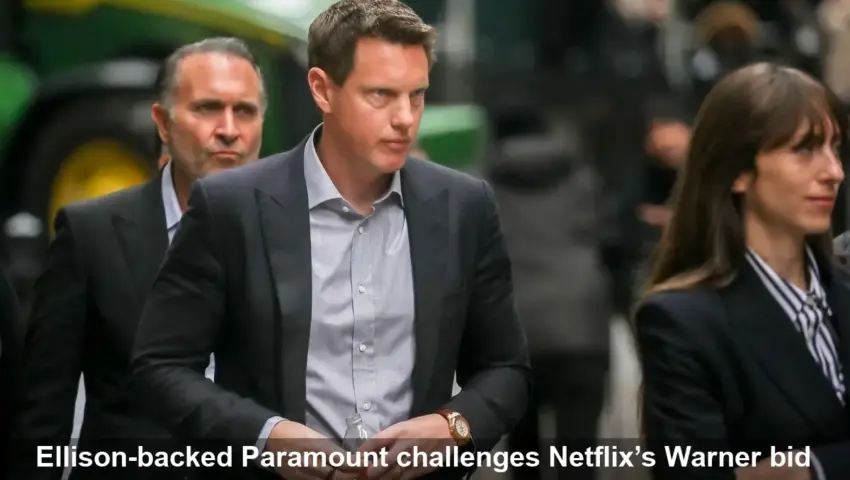
• Netflix has a signed all-cash deal to buy Warner Bros. studio and streaming business for $27.75 a share.
• Warner Bros. board unanimously approved Netflix’s offer; Paramount Skydance is the bidder still contesting it.
• Paramount, backed by Larry Ellison, can still increase its bid or press regulatory concerns before shareholders vote.
• Regulators in the U.S. and Europe are expected to review the transaction, creating a potential avenue for challenge.
What happened
Netflix agreed to acquire Warner Bros. Discovery’s studio and streaming operations in an all-cash transaction valued at $27.75 per share. Warner Bros.’ board has unanimously approved the deal and plans to put it to a shareholder vote in the coming months.
That outcome has left Paramount Skydance — the company led by David Ellison and financially backed by Larry Ellison — on the outside. Despite high-profile maneuvering and a narrow Delaware lawsuit seeking valuation detail, Paramount has not yet topped Netflix’s offer.
Paramount’s options and strategy
Paramount can still raise its bid before Warner Bros. shareholders vote. The Ellisons have the capital to do so, and Paramount’s team has signaled its offer isn’t final. But unless Warner Bros. investors reject Netflix’s deal, the streaming giant remains in the driver’s seat.
Another pathway for Paramount is to lean on regulators. Politicians and competition officials in the U.S. and Europe have expressed concerns about Netflix acquiring Warner Bros. studios and HBO, meaning antitrust reviews are likely. Paramount may use the prospect of regulatory rejection to persuade shareholders to oppose the Netflix sale.
Paramount’s narrow Delaware lawsuit asked Warner Bros. to detail how it values assets like cable networks, a move intended to show why the Netflix offer might not be superior. Warner Bros. produced a valuation breakdown; the legal battle appears low-stakes and unlikely by itself to stop the takeover.
Why Larry Ellison matters
Larry Ellison’s backing changes the dynamics. Paramount’s market capitalization is far smaller than Warner Bros., but the financial muscle of Larry Ellison makes a bid plausible where it might otherwise be dismissed. It essentially turns this contest into David and Larry Ellison versus Netflix.
David Ellison argues Warner Bros. would give Paramount immediate scale — a rich library, established streaming operations and franchises that would accelerate any turnaround plan.
Regulatory and industry implications
If regulators demand divestitures — perhaps in selected European markets — Netflix might negotiate remedies. But global divestiture of HBO or the core library is unlikely. Should regulators clear the deal, Paramount’s options narrow considerably.
Netflix co-CEO Ted Sarandos has pledged to honor theatrical commitments, including a 45-day window for major releases, at least in the near term. Still, many in Hollywood worry about what consolidation means for creative talent and labor talks.
Why it matters
Warner Bros. remains a culturally important studio and network group, home to HBO and a vast film and TV catalog. Ownership will shape how major franchises are distributed and monetized for years. With a shareholder vote and regulatory reviews ahead, the final outcome is still uncertain — but for now, Netflix holds the lead, and larry ellison-backed Paramount must decide whether to escalate its bid or press for regulatory intervention.
Image Referance: https://www.bloomberg.com/news/newsletters/2026-01-25/the-warner-bros-bidding-war-is-over