
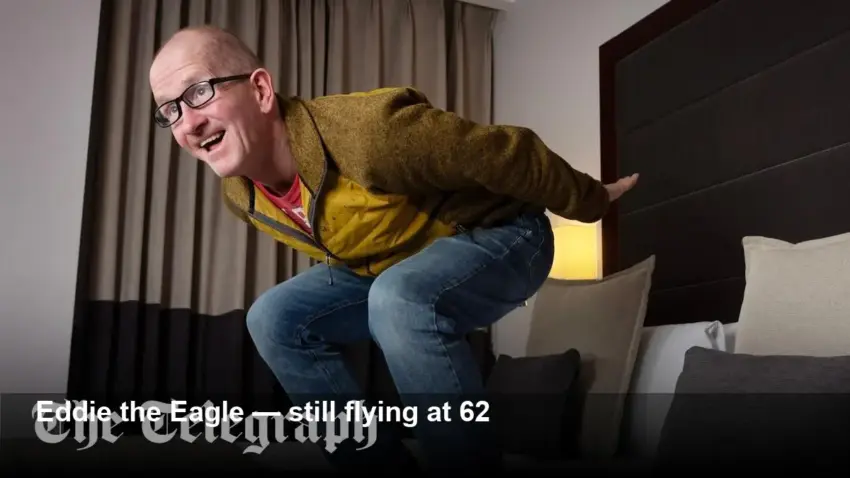
- Eddie the Eagle (Michael Edwards) remembers going from sleeping in barns to staying in five-star hotels after Calgary 1988.
- At 62 he still ski-jumps and says he could return to former form with focused training.
- He criticises the rule that effectively ended his Olympic comeback and plans to donate his 1988 uniform to the Olympic Museum.
H2: A household name from Calgary to today
Eddie the Eagle — born Michael Edwards — remains one of the Winter Olympics’ most enduring characters. Thirty-eight years after his memorable flights in Calgary, Edwards says his 15 minutes of fame turned into a lifetime of invitations, odd jobs and public appearances. He went from sleeping in cow sheds and scraping food from bins to flying first class and staying in luxury hotels.
H3: From barns to bright lights
Edwards openly recounts the hardship that preceded his celebrity. Bereft of sponsorship, he slept in cow sheds, parked overnight in building basements and did odd jobs to finance his ski-jumping dream. After Calgary, the public welcomed him with open arms — tens of thousands met him on his return and he boasted TV appearances, stage roles and even a pop single.
“My feet didn’t touch the ground for the rest of the year,” he says, describing a whirlwind that included sharing green rooms with Hollywood names and opening shopping centres and golf courses.
H3: Still jumping at 62
Despite his age, Edwards has not hung up his skis. He reports recent jumps on 60m and 90m hills in Courchevel and claims he could regain or better his old standard with a month’s daily training. He remains playful about ambitions: to ski a black run on his 100th birthday. “I was in Courchevel not long ago… the muscle memory helps you to survive,” he told the Telegraph.
H4: The film, the rule, and the legacy
Edwards’ story inspired the 2016 film Eddie the Eagle, which amplified his underdog image — though the movie took liberties with some events and characters. His celebrity also prompted the International Olympic Committee to tighten qualification rules in 1990 (often dubbed the “Eddie the Eagle Rule”), requiring athletes to be in the top percentage of their sport to compete. Edwards says that rule effectively shut the door on his return and calls it short-sighted, arguing it runs counter to the Olympic ideal of taking part.
H3: Life off the hill
After competitive jumping Edwards retrained, studying law and later returning to building and plastering work. He still buys and renovates houses between speaking engagements and touring appearances. Personal life has settled: following a difficult divorce, he now has a partner who travels with him and helps keep him grounded.
H4: Why Eddie still matters
Whether judged on competitive results or cultural impact, Eddie the Eagle’s appeal endures. He embodies an Olympic spirit that prizes persistence and joy as much as medals. He plans to donate his Calgary uniform to the Olympic Museum in Lausanne, a final act that underlines a simple truth he still lives by: he just loved to fly.
Image Referance: https://www.telegraph.co.uk/winter-olympics/2026/02/08/eddie-the-eagle-interview-want-ski-black-run-birthday/