
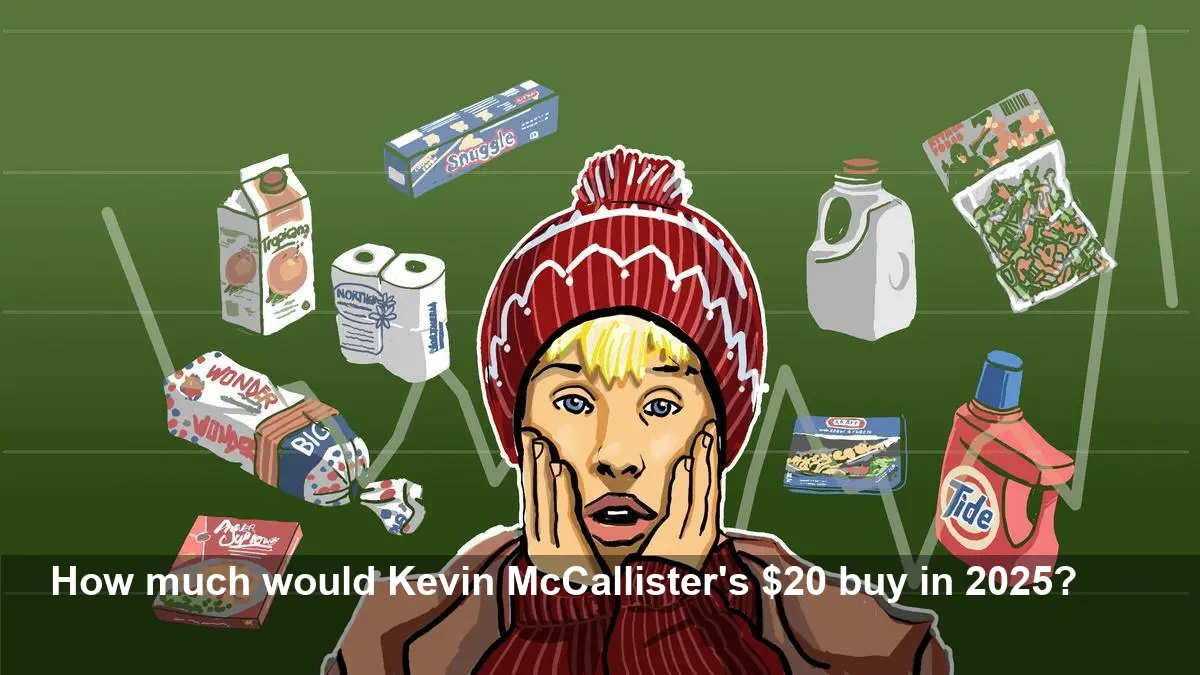
- Kevin McCallister’s grocery run in Home Alone cost under $20 at the time.
- Adjusted for inflation, that $20 would be roughly $45–$50 in 2025 (about $48).
- Rising food prices mean the same haul buys fewer items today than in 1990.
- A modest grocery list in the film highlights how household staples have grown pricier.
H2: Kevin McCallister’s $20 haul then vs. now
When Kevin McCallister wheels a small grocery basket through a Chicago supermarket in Home Alone, the total rings up at under $20. That bargain feel is part of the movie’s charm — a kid stocking up on breakfast cereal, juice and other staples while home alone.
Adjusted for decades of inflation, that same $20 would be worth roughly $45–$50 in 2025, with most estimates centering near $48. That conversion uses broad consumer-price trends since 1990 and gives a quick sense of how grocery purchasing power has changed.
H3: What affects grocery inflation
Several forces have pushed food prices higher since Home Alone hit theaters. Labor costs, supply-chain disruptions, fuel prices and extreme weather events have all raised the cost of getting food from farms and factories to store shelves. Grocery inflation also varies by category — fresh produce and meat often climb faster than shelf-stable items like pasta or canned goods.
Still, a small basket of staples — cereal, milk, juice and a frozen entree — remains more expensive in real terms than it was in the early 1990s. That’s why Kevin’s under-$20 receipt looks quaint next to a modern grocery bill.
H4: How far $48 goes in 2025
If we translate Kevin McCallister’s haul into 2025 dollars, the money buys some basics but fewer items overall. For example, $48 might cover a couple of boxes of cereal, a gallon of milk, a carton of eggs and a few convenience items at many U.S. supermarkets — but it won’t stretch as far for protein or fresh produce as it once did.
Regional differences also matter: grocery costs in big cities tend to be higher than in smaller towns, so the on-screen bargain would look different depending on the store’s location.
H3: Why the cinema moment still resonates
Beyond price tags, Kevin’s grocery run is a storytelling beat: it shows his resourcefulness and amplifies the movie’s mix of childhood independence and comic peril. The scene now doubles as a pop-culture time capsule — a snapshot of everyday life and prices from another era.
H4: Takeaway for modern viewers
Rewatching Home Alone with 2025 prices in mind offers a small lesson in economic change. A sum that felt like pocket change in 1990 represents a noticeably larger amount today, yet still buys fewer essentials. Kevin McCallister’s under-$20 haul remains memorable not because of the exact dollar total, but because it captures a moment most viewers recognize: shopping for basics and stretching a small budget.
Whether you watch for nostalgia or movie trivia, the grocery scene is a quick reminder that prices shift over time — and that small everyday choices in films can reveal broader economic stories.
Image Referance: https://www.usatoday.com/story/graphics/2025/12/16/home-alone-grocery-prices-kevin-mccallister-2025/87670458007/