
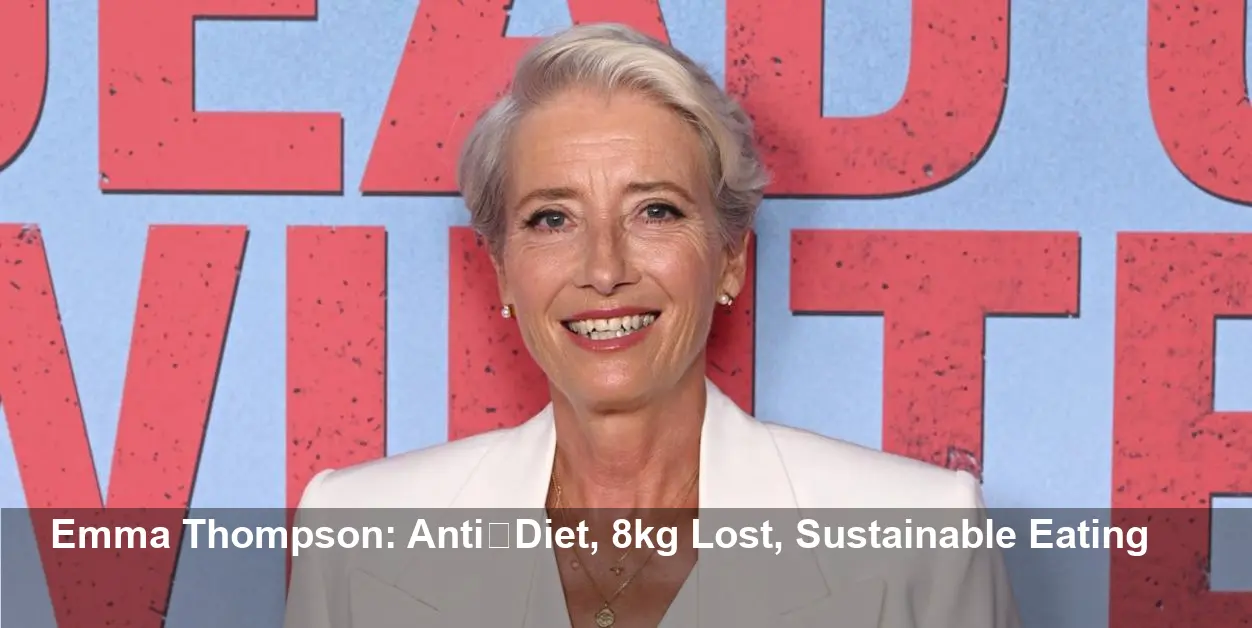
- Emma Thompson followed a flexible, ‘anti-diet’ plan and lost about 8kg without extreme restriction.
- She worked with nutritionist Louise Parker and combined protein-led meals with regular resistance training.
- The approach prioritises balance, sleep, mental wellbeing and habits that last — not food demonisation.
H2: What Emma Thompson calls an anti-diet
Dame Emma Thompson, 66, says she rejects strict dieting in favour of a sustainable, anti-diet approach. Working with Louise Parker — the nutritionist who also trains the Duchess of Cambridge — Thompson followed a calorie-controlled plan that focused on regular protein-rich meals, slow-digesting carbohydrates (whole grains, vegetables, fruit), healthy fats and two snacks a day.
She emphasises flexibility: occasional bacon, cheese or a glass of wine are allowed. The goal was long-term change, not short-lived restriction. Thompson has spoken publicly about the harm of crash diets earlier in her career and says they “screwed up my metabolism” and her relationship with food.
H3: Diet plus disciplined training
Parker’s method pairs nutrition with intense physical training. Thompson reportedly completed 90-minute resistance-based workouts up to six times a week, mixing strength work and ballet-inspired exercises. Weekly weigh-ins that measure body fat and muscle helped track progress beyond just the scales.
That combination — steady calorie control, adequate protein and frequent, structured strength sessions — is central to her results: around 8kg lost over time and improved health markers without extreme deprivation.
H3: Why experts say this works
Nutrition and behavioural science experts back the anti-diet emphasis on flexibility. Zoe Griffiths, VP of behavioural medicine and a registered dietitian, explains that sustainable change comes from routines that fit real life, not from willpower or rigid bans. Similarly, nutritionists stress that the best “diet” is one you can stick with long term and that doesn’t demonise foods in moderation.
Designing eating patterns that support energy, protein and fibre intake first — and then adjusting other elements — can reduce overeating and improve appetite regulation.
H4: 3 practical takeaways to eat well long term
- Build supportive habits: Start with steady meals, adequate protein and fibre before cutting foods out.
- Prioritise sleep and mental wellbeing: Recovery and mindset matter for appetite and consistency.
- Design flexible rules: Make sure your plan holds up during busy or stressful weeks — occasional treats keep you on track.
H5: A realistic model for celebrity — and everyday — life
Thompson’s story highlights a simple message: sustainable weight loss often comes from small, repeatable changes, not punishment. Her anti-diet approach combines structure and enjoyment, proving that a flexible plan plus consistent strength training can deliver lasting results without sacrificing life’s pleasures.
Image Referance: https://www.womenshealthmag.com/uk/food/healthy-eating/a69836649/emma-thompson-anti-diet/