
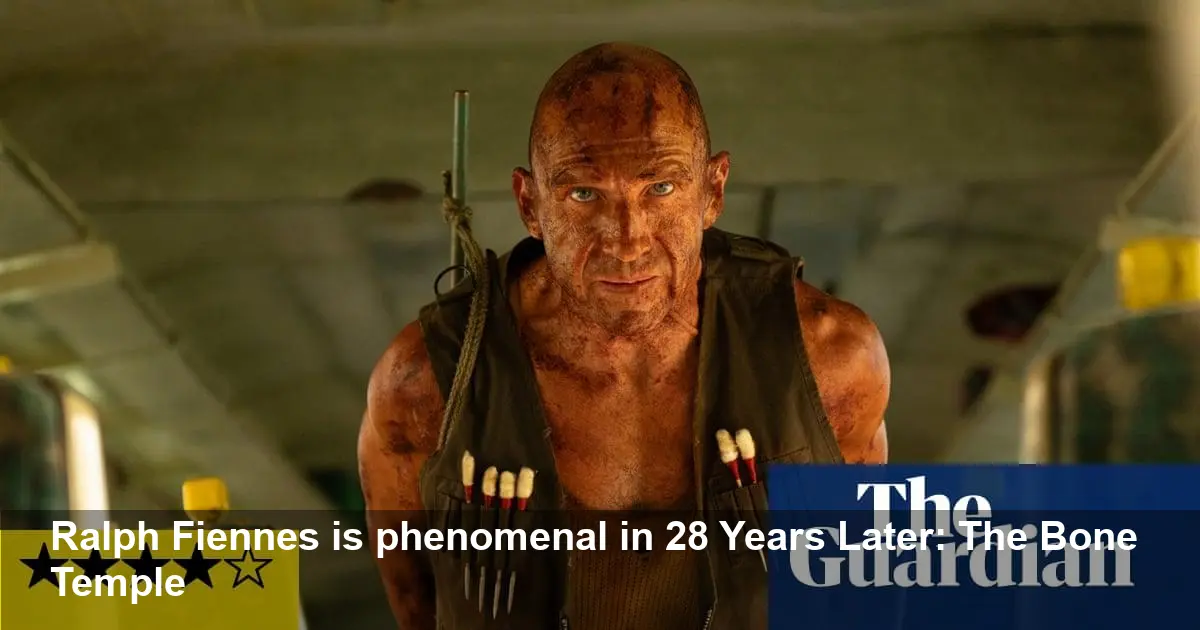
• Ralph Fiennes gives a career-highlight turn in 28 Years Later: The Bone Temple.
• Director Nia DaCosta refocuses the series: human antagonists outshine zombies.
• Jack O’Connell leads a brutal, Clockwork-Orange–style gang that drives the film’s tension.
• The film opens Jan 15 in Australia and Jan 16 in the UK and US.
H2: Fiennes steals the spotlight in an energized fourquel
Ralph Fiennes delivers what many critics are calling the standout performance of the 28 Years Later franchise in The Bone Temple. Playing Dr Ian Kelson, Fiennes brings a strangely gentle, almost Christ‑like presence to a post‑apocalyptic landscape, and one scene — his ecstatic dance to Iron Maiden’s The Number of the Beast — has already become an early talking point.
Watch: Iron Maiden — The Number of the Beast (YouTube)
https://www.youtube.com/watch?v=WxnN05vOuSM
Short, vivid moments like this punctuate a film that prioritises character and conflict over nonstop undead action.
H3: Human villains take center stage
Director Nia DaCosta and the returning creative team pivot the franchise’s focus: the zombies are still present, but they’re often background to a more compelling danger — other humans. Jack O’Connell plays Sir Lord Jimmy Crystal, an unhinged leader of a violent, ultraviolent gang whose look and theology echo Clockwork Orange-style iconography and disturbingly warped celebrity worship. The gang’s brutality provides the film’s most immediate and cinematic jeopardy, pushing the story into darker, more human territory.
H3: Story and tone — grim, gruesome, and energised
Set immediately after the events of the prior installment, the film follows Spike (Alfie Williams), a young survivor drawn off a quarantined island looking for the mythic doctor who built an ossuary known as the bone temple. The narrative turns on encounters with the Jimmies — sadistic, theatrical non-infected humans — and the film mines real moral and psychological tension from those interactions.
The zombies themselves are used more sparingly and, in one notable case, are reframed as beings in the process of transformation rather than one‑dimensional monsters. That choice allows for quieter, sometimes surprisingly affecting beats amid the gore.
H4: Performances, direction and standout elements
Fiennes’s restraint and offbeat physicality contrast with O’Connell’s explosive menace; together they create the film’s central engine. Nia DaCosta’s direction keeps scenes lean and kinetic. The film is gruesome and energetic, but critics note its intelligence comes from interpersonal conflict and unsettling character work rather than spectacle alone.
H4: Release and what to expect
28 Years Later: The Bone Temple opens on 15 January in Australia and 16 January in the UK and US. Expect a film that will divide viewers — praised for its performances and fresh take on the franchise, but clearly aimed at audiences comfortable with graphic horror and bleak human drama.
If you follow the 28 franchise, this instalment reframes the threat: in The Bone Temple, people are often scarier than the undead.
Image Referance: https://www.theguardian.com/film/2026/jan/13/28-years-later-the-bone-temple-review-ralph-fiennes-is-phenomenal-in-best-chapter-yet-of-zombie-horror