
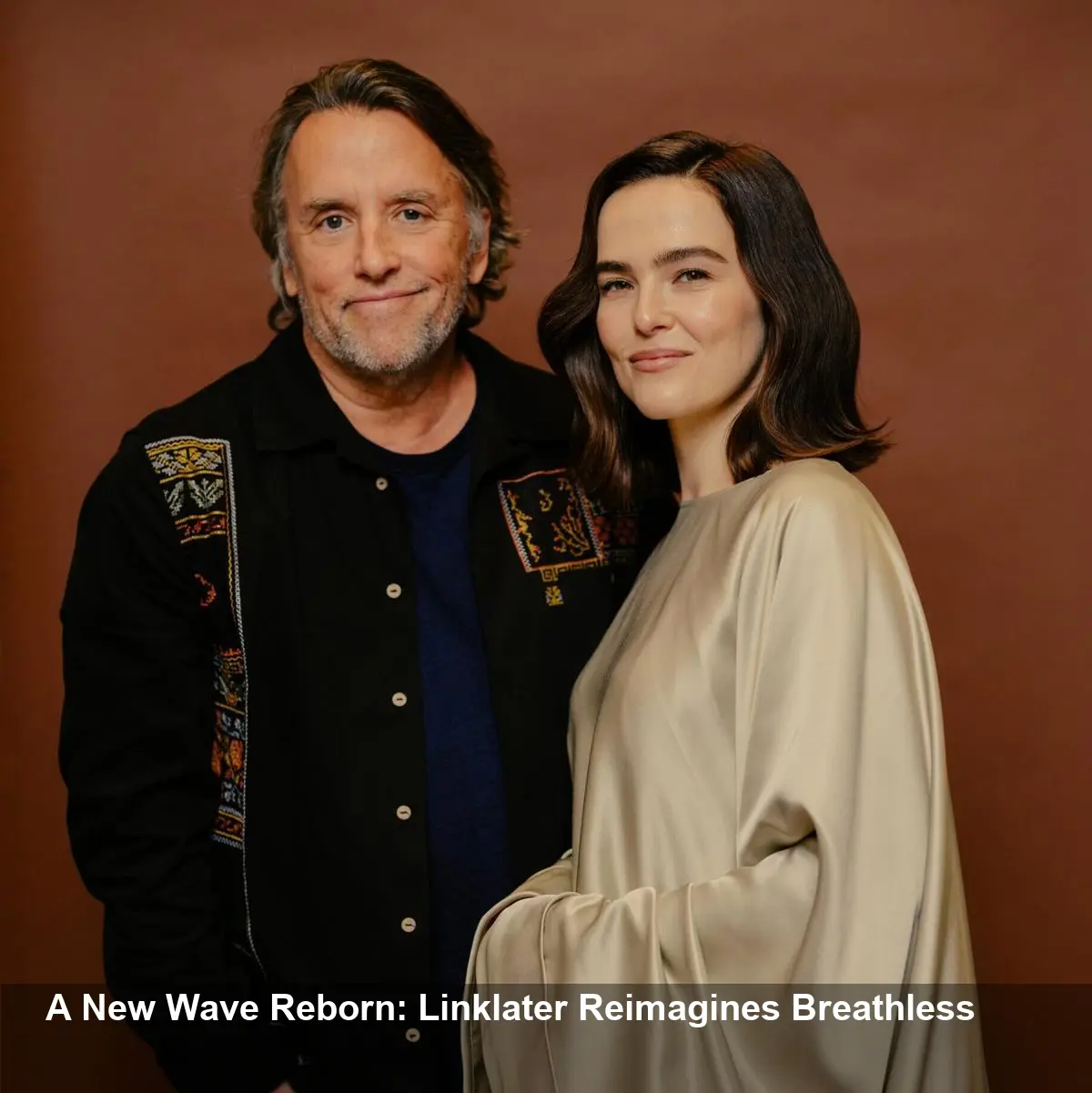
• Richard Linklater’s Nouvelle Vague imagines the creation of Jean-Luc Godard’s Breathless.
• Zoey Deutch headlines in a Golden Globe–nominated performance.
• The film recreates French New Wave techniques—improvisation, jump cuts and on-location shooting.
• Nouvelle Vague functions as both homage and playful meditation on filmmaking.
H2: A modern love letter to the French New Wave
Richard Linklater’s Nouvelle Vague revisits the restless energy of 1960s French cinema by imagining what it might have felt like to make Jean-Luc Godard’s Breathless. Starring Zoey Deutch and directed by Linklater, the Golden Globe–nominated film blends reverent detail with contemporary sensibilities, giving audiences a behind-the-scenes fantasia rather than a strict historical retelling.
H3: How Linklater recreated Breathless
Linklater leans into the tools most associated with the New Wave—on-location shooting, handheld cameras, quick editing rhythms and improvisation. Rather than replicate Breathless frame for frame, Nouvelle Vague translates the movement’s spontaneity into modern production choices. The result is a film that evokes the texture and attitude of Godard’s era while keeping a distinct Linklater stamp: conversational scenes, loose interiors and a focus on how filmmakers invent themselves on the fly.
H4: Performance and production style
Zoey Deutch anchors the film as an actress caught between muse and collaborator. Her performance channels the cool irreverence of New Wave screen icons while remaining grounded in a personal, contemporary perspective. Supporting performances and a nimble crew echo the guerrilla filmmaking tactics that marked early New Wave sets—small teams, rapid setups and a willingness to embrace the unpredictability of street locations.
Cinematography favors high-contrast black-and-white sequences alongside moments of color, a visual choice that hints at both homage and reinvention. The editing nods to jump cuts and elliptical storytelling without turning Nouvelle Vague into imitation; it uses those techniques to explore character and process.
H5: What the film asks about art and myth
At its core, Nouvelle Vague is less an attempt to chronicle facts than to interrogate mythmaking in cinema. Linklater and his cast imagine the creative alchemy that produces lasting films: the improvisations that turn into signature shots, the accidents that become themes, and the personalities whose chemistry fuels artistic risk. The film treats filmmaking as a collaborative experiment, one that births legends like Breathless through both intention and happy mistake.
H5: Awards and reception
The film earned a Golden Globe nomination, signaling industry recognition for its inventive approach and performances. Whether viewers come for Deutch’s lead turn, Linklater’s directorial curiosity or the film’s cinephile pleasures, Nouvelle Vague positions itself as a conversation-starter—a movie about how movies are born.
For audiences curious about the French New Wave or the creative process behind cinema’s myths, Nouvelle Vague offers a brisk, affectionate reimagining that foregrounds style, improvisation and the messy charm of making art on the edge.
Image Referance: https://www.culturedmag.com/article/2025/12/22/film-richard-linklater-zoey-deutch-nouvelle-vague/