
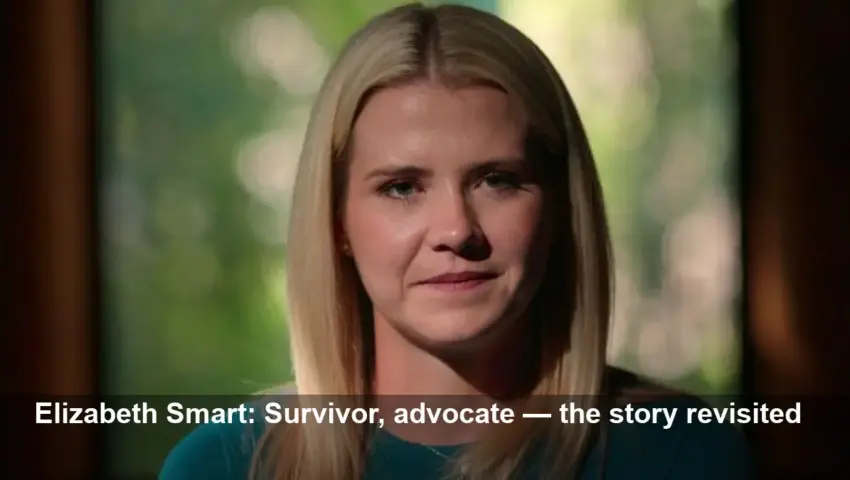
- Netflix premieres “Kidnapped: Elizabeth Smart” on Jan. 21, renewing interest in the 2002 abduction.
- Elizabeth Smart, now 38, has built a life focused on family, advocacy and survivor education.
- The documentary includes new material and interviews; some family members declined to participate.
- Key figures: captors Brian David Mitchell (in prison) and Wanda Barzee (released in 2018); sister Mary Katherine and parents remain active in advocacy.
H2: What the new Netflix documentary covers
“Kidnapped: Elizabeth Smart” revisits the abduction that gripped the nation in 2002. The film features interviews with Elizabeth Smart, family members and other people tied to the case, plus previously unseen material, according to filmmakers. Smart’s own voice anchors the story — she reminded audiences in 2013, “I’m not just that girl that was kidnapped. That happened to me, but I’m so much more.”
Watch: Anderson Cooper interview (2013)
https://www.cnn.com/videos/us/2013/10/08/ac-intv-elizabeth-smart-pt-2.cnn
H2: The timeline — abduction, rescue, trial
On June 5, 2002, 14-year-old Elizabeth Smart was taken from her Salt Lake City bedroom and held for nine months. Her captors were Brian David Mitchell and his wife, Wanda Barzee. Thousands joined the search, and the case broke open when Elizabeth’s 9-year-old sister, Mary Katherine Smart, suddenly recalled a drifter known as “Immanuel” and aided the investigation.
Smart was found alive on March 12, 2003, walking with Mitchell and Barzee in Sandy, Utah, about five miles from her home. Mitchell was convicted of kidnapping and unlawful transportation of a minor in 2010 and was later sentenced to life in prison. Barzee pleaded guilty, received a 15-year sentence and was released from custody in September 2018; Smart said she was disappointed by that release.
H2: Where Elizabeth Smart is now
Now in her late 30s, Smart has focused on family and advocacy. She married Matthew Gilmour in 2012; the couple has three children. In 2011, she founded the Elizabeth Smart Foundation, which runs programs such as Smart Defense and Smart Talks to support survivors and teach abuse-prevention skills. Smart has testified before Congress, helped push legislation including AMBER Alert-related measures, and written two books — My Story and Where There’s Hope.
H3: Family and key figures today
Mary Katherine Smart, whose memory helped solve the case, lives a more private life as a special education teacher and is pursuing a board-certified behavior analyst credential. Parents Ed and Lois Smart became public advocates after the abduction; Ed later worked with youth nonprofits and publicly announced he is gay in 2019. Lois remains a public speaker. Some family members chose not to take part in the Netflix project; Elizabeth explained she wanted the story to serve a purpose and bring good.
H4: Why the story still matters
The documentary renews public attention on a case that reshaped child-safety advocacy. For Smart, revisiting the past has been part of turning trauma into action — from public testimony to running programs that teach prevention and empower survivors.
Sources: Netflix Tudum, CNN reporting and archived interviews.
Image Referance: https://www.cnn.com/2026/01/21/us/elizabeth-smart-abduction-today