
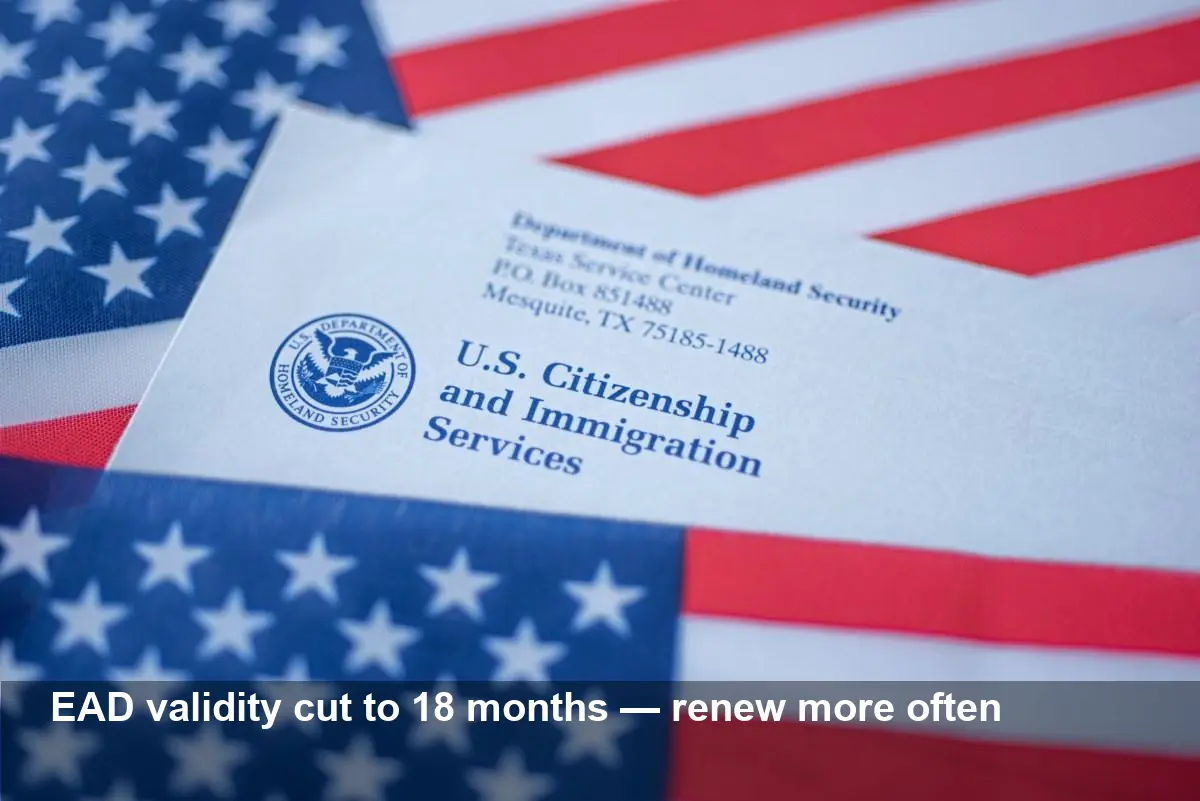
- USCIS has reduced the maximum validity for Employment Authorization Documents (EADs) from five years to 18 months, effective Dec. 5, 2025.
- The change affects initial and renewal EADs for certain green card applicants and other noncitizen workers, leading to more frequent renewals and fees.
- Applicants should file renewals up to 180 days early, prepare documentation, and alert employers to expect more I-9 reverification.
What changed
On Dec. 4, 2025, U.S. Citizenship and Immigration Services (USCIS) announced a new limit on the maximum validity period for certain Employment Authorization Documents (EADs), commonly called work permits. The new policy reduces the maximum validity for both initial and renewal EADs from five years to 18 months, effective Dec. 5, 2025. EADs issued before Dec. 5 retain their original expiration dates, but any renewal issued after that date will be capped at 18 months.
Who is affected
The change covers certain classes of noncitizens who rely on EADs while their green card (permanent residency) or other immigration petitions are pending. That includes many adjustment-of-status applicants who use an EAD to work while awaiting a final decision. Analysts warn longer USCIS processing times could mean more renewals and potential gaps in employment authorization.
Practical steps for applicants
- File early: USCIS allows applicants to submit EAD renewal filings up to 180 days before the current card expires.
- Gather documents: Keep passport copies, I-485 receipt notices, and the prior EAD ready to speed filing.
- Budget for fees: Renewals carry filing fees and possible biometrics; green card applicants may qualify for fee discounts in specific circumstances.
- Consult counsel: Immigration attorneys can advise on timing, portability, and strategies to avoid authorization gaps.
Employer impact and compliance
Employers should prepare for more frequent I-9 reverification. With EADs expiring every 18 months on renewed cards, human resources teams may need to update tracking systems, reverify employment eligibility, and communicate with affected employees to avoid compliance lapses.
Official rationale and responses
USCIS Director Joseph Edlow said the policy aims to allow more frequent vetting of noncitizens working in the U.S. Officials cited recent security concerns as part of a broader push for more frequent screening. President Donald Trump also commented publicly on related policies via Truth Social. Critics, including immigration attorneys and workplace advocates, warn the shorter validity could strain USCIS processing capacity and raise risks of work authorization gaps.
Embedded links and sources
- USCIS announcement: https://www.uscis.gov/newsroom/news-releases/dhs-ends-automatic-extension-of-employment-authorization
- Coverage and commentary include reporting from Business Insider and statements referenced by Newsweek.
What to watch next
Affected individuals should monitor USCIS updates, file renewals early, and speak with employers and legal advisors. Changes in processing times or further guidance from USCIS could alter how the 18-month cap affects job continuity for green card applicants.
Image Referance: https://www.newsweek.com/green-card-update-trump-admin-change-applications-11173207