
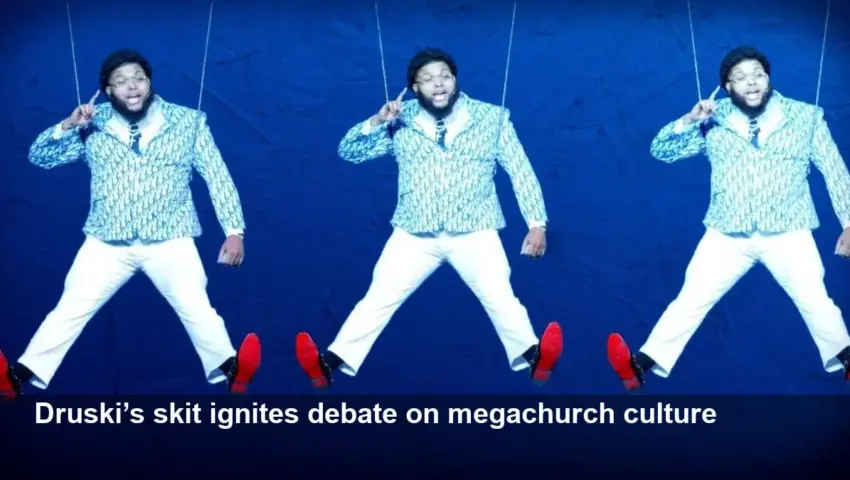
- Druski’s new viral skit parodies prosperity-style Black megachurches and has drawn tens of millions of views.
- Reactions split: some praise the satire for exposing commercialization and hypocrisy; others call it disrespectful to faith.
- Voices like Lecrae urge internal reform and discernment rather than abandoning church altogether.
What Druski’s skit shows
Comedian Drew Desbordes — known as Druski — released a sketch that lampoons prosperity-style megachurch culture. In the video, an over-the-top pastor floats above the congregation in a harness, brags about wearing “Christian Dior and Christian Louboutins,” and presides over a fundraiser that asks for millions for overseas projects while ignoring a homeless man who hasn’t tithed.
The skit’s exaggerated visuals and sharp punchlines pushed it to viral status, provoking wide conversation about money, performance and leadership in some modern churches.
Why the clip struck a nerve
The satire lands because it reflects real tensions: growing celebrity pastor culture, glossy productions, and visible signs of wealth in some congregations. Supporters of the skit say Druski isn’t attacking faith itself but calling out practices many find troubling — from ostentatious displays to pressure on vulnerable members to give beyond their means.
Opponents say the sketch crosses a line by using sacred settings as comedic fodder and worry it reinforces negative stereotypes about Black faith communities.
Mixed reaction from the public and leaders
Social media responses ranged from praise to anger. Some viewers applauded the critique: “It mirrors commercialization and greed in some mega churches.” Others voiced personal offense and said the skit violated spiritual reverence.
Grammy-winning artist Lecrae weighed in, saying his reaction was “recognition” rather than offense. He urged accountability: warn congregations about “wolves in sheep’s clothing,” but also urged mercy and internal reform. Lecrae framed the skit as a mirror that can prompt leaders and members to reclaim “the simplicity of the gospel.”
What this debate means for churches
Religious leaders and commentators suggest the conversation is useful when it leads to honest self-examination. Critiques like Druski’s can pressure churches to evaluate stewardship, transparency, and the balance between production value and pastoral care.
At the same time, many viewers asked for nuance: not every large church fits the caricature, and for many people congregations remain sources of community, care and spiritual growth.
Where the conversation goes next
The skit has already prompted broader online discussion — from calls for accountability to reminders about small, local churches where leaders personally know members. Whether viewers see Druski’s clip as helpful satire or an unfair attack, the episode has reopened questions about money, power and performance in church life.
For now, the viral moment underscores a lasting reality: popular comedy can spark cultural reckoning, and for faith communities, it can be a prompt to address problems internally without losing the trust of those they serve.
Image Referance: https://afro.com/druski-skit-church-debate/