
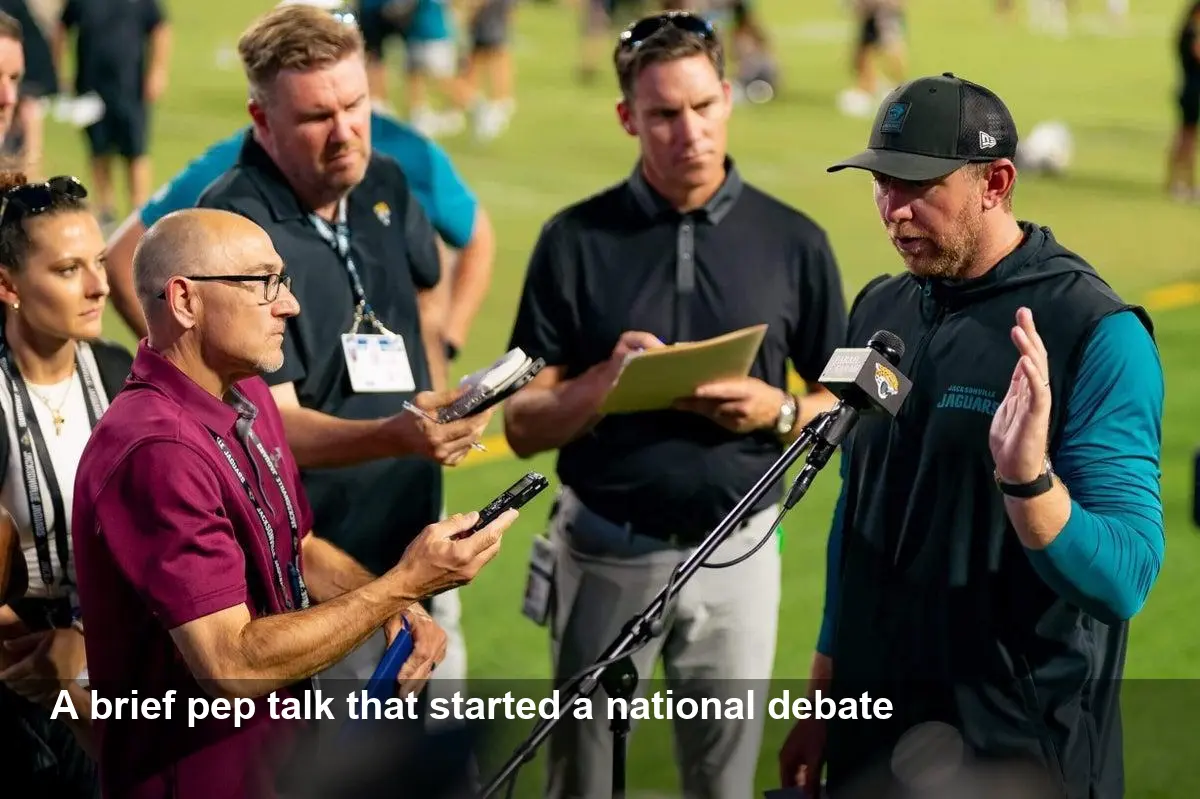
- A brief postgame pep talk from Jacksonville Free Press reporter Lynn Jones to Jaguars coach Liam Coen went viral and ignited debate over journalistic roles.
- Adam Schefter amplified the clip on X, driving national attention; commentators including Jemele Hill weighed in.
- The exchange highlighted tensions between community-focused local reporting and the expectations of impartial, hard-nosed journalism.
- The episode renewed broader concerns about access journalism, team-controlled media and the precarious state of the press.
H2: What happened in the postgame moment
After the Jacksonville Jaguars’ narrow loss to the Buffalo Bills, longtime Jacksonville Free Press associate editor Lynn Jones took the microphone and offered coach Liam Coen a short, emotional pep talk instead of asking a question. The exchange lasted about 20 seconds and ended when Jones returned the mic. A clip of the moment was reposted by NFL insider Adam Schefter on X (formerly Twitter), bringing the local interaction to a national audience and sparking a wave of reactions.
Embedded post: Adam Schefter reposted the exchange: https://x.com/AdamSchefter/status/2010478173155438897?s=20
H3: Why it touched a nerve
Many sports reporters pushed back, saying postgame access is for asking questions and holding teams accountable — not for offering consolation. Critics argued that stepping into a supportive role blurs lines and can undercut the independence expected of beat reporters.
Others — including Jemele Hill — expressed sympathy for Jones as a community reporter while also acknowledging the unusual nature of the interaction. Jemele Hill’s response on X: https://x.com/jemelehill/status/2010550294002982985?s=20
H2: Two valid perspectives
The backlash revealed two legitimate viewpoints. On one hand, watchdog journalism relies on distance and skepticism to surface stories fans and owners might prefer stay hidden. Reporters who tether too closely to teams can lose credibility.
On the other hand, local reporters like Jones — who cover a team that is part of the community’s civic life — sometimes wear different hats. Community papers often balance coverage with the broader interests of residents who see the team as an economic and cultural institution.
H3: What this says about modern sports media
This episode also exposed wider industry shifts. Team-owned and affiliate media increasingly attend games to create content, not to probe. Creators with direct ties to franchises may openly cheer or promote access-driven content, and credentialing has expanded beyond traditional outlets.
Meanwhile, legacy reporters feel under siege: audience trust is fragile, and automated tools and platform-driven amplification make every slip feel existential. That pressure helps explain why many journalists reacted strongly to a seemingly short, human moment.
H2: Why journalism still matters
The debate over one clip doesn’t erase journalism’s role. Reporters lift up stories, ask tough questions and document decisions that affect fans and communities. Distinguishing community engagement from compromising impartial reporting is a daily responsibility — and moments like the Lynn Jones-Liam Coen exchange are useful reminders to reflect on that balance.
Quick takeaway: reporters are human, journalism needs defenders, and clear standards help preserve both community connection and public accountability.
Image Referance: https://www.nytimes.com/athletic/6966462/2026/01/14/liam-coen-lynn-jones-backlash-journalism/