
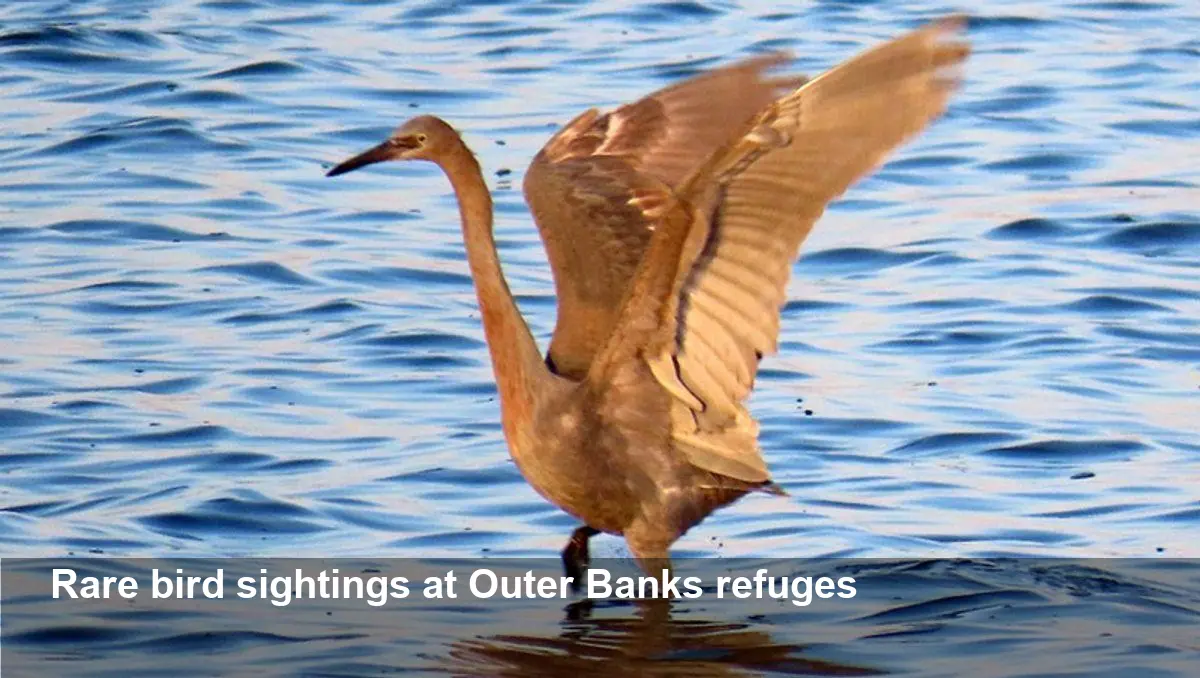
- Immature reddish egret photographed at Pea Island National Wildlife Refuge.
- Lincoln’s sparrow and a female painted bunting recorded at Alligator River Refuge.
- Eastern North Carolina refuges host expected winter migrants plus surprising vagrants.
Rare and expected migrants on the Outer Banks
The U.S. Fish and Wildlife Service’s National Wildlife Refuges in eastern North Carolina are drawing birdwatchers this season with both the usual winter migrants and a handful of unexpected visitors. In addition to waterfowl and shorebirds that regularly winter on the barrier islands, refuge staff and visitors have reported several rare species that are unusual for the region.
Pea Island: an uncommon reddish egret
At Pea Island National Wildlife Refuge, observers documented an immature reddish egret spending several days in the refuge’s north pond. Reddish egrets are typically associated with Gulf Coast and Mexican shorelines, making this sighting notable for the Outer Banks. Photographs supplied by refuge photographers captured the bird’s lanky profile and dark legs as it hunted in shallow water.
Alligator River: sparrow and bunting surprises
Alligator River National Wildlife Refuge yielded two more rare finds: a Lincoln’s sparrow and a female painted bunting. Both species usually winter much farther south, with painted buntings most commonly seen in the southeastern U.S. Gulf region and Mexico. Their appearance on the Outer Banks is uncommon and has excited local birders.
Why these sightings matter
Refuges on the Outer Banks act as important stopovers and wintering grounds for migrating birds. While many species—ducks, geese, sandpipers and plovers—are expected this time of year, vagrant individuals sometimes stray from typical ranges. Such records help biologists track migration patterns and can indicate broader changes in habitat use or weather-influenced movement.
Tips for birdwatchers visiting the refuges
- Bring binoculars and a field guide; many rare birds can be seen from trails and roadside overlooks.
- Stay on marked paths and maintain distance from wildlife. Respect roosting and feeding birds, especially during cold weather.
- Check refuge updates or local birding groups for recent sightings before you go.
“When you visit our Refuges, keep an eye out for both the regular and rare birds that visit,” the U.S. Fish and Wildlife Service advised, encouraging visitors to enjoy the refuges responsibly.
These recent sightings reinforce the Outer Banks’ reputation as a prime place for coastal birding. Whether you’re after the expected wintering flocks or hoping to spot an out-of-range vagrant, the national wildlife refuges on the Outer Banks continue to offer plenty of opportunities for discovery.
Image Referance: https://www.thecoastlandtimes.com/news/rare-birds-on-the-outer-banks-refuges-9e76b4fe/