
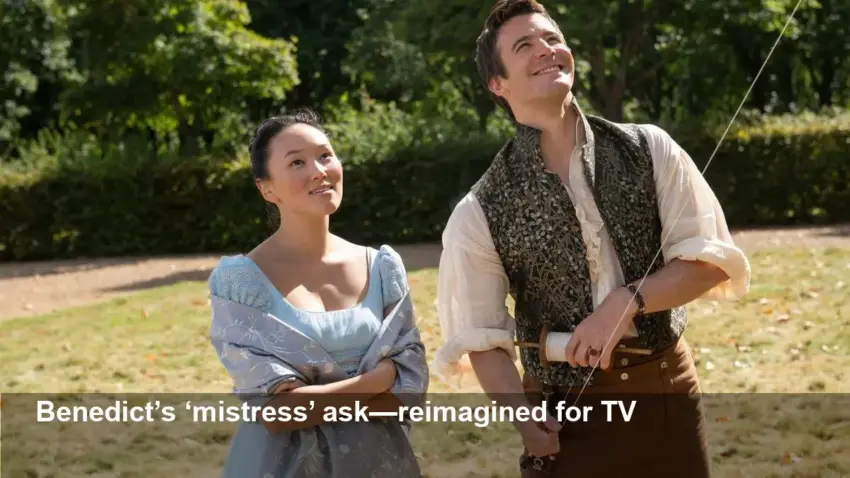
- Bridgerton season 4 adapts Julia Quinn’s novel but softens the book’s most controversial plot point.
- The series removes Benedict’s blackmail and delays the “mistress” proposal, giving Sophie more agency.
- Benedict (Luke Thompson) is portrayed with more nuance onscreen; Jonathan Bailey’s Anthony is referenced as part of the show’s social context.
- Season 4 releases in two parts; part two arrives Feb. 26.
How the show changes the book’s most problematic scene
Bridgerton season four keeps the core Cinderella-style romance between Benedict Bridgerton (Luke Thompson) and Sophie Baek (Yerin Ha), but the adaptation reshapes the novel’s most controversial beat: Benedict’s offer that Sophie become his mistress. The series preserves the attraction and stakes while reframing power dynamics so Sophie is less clearly coerced and more centered in her choices.
Key differences from the novel
In Julia Quinn’s An Offer From a Gentleman, Benedict initially pressures Sophie into accepting a life as his kept woman, a plot point readers have called manipulative and outdated. For television, the writers remove the element of blackmail and delay Benedict’s indecent proposal. Onscreen he apologizes for a passionate kiss, seeks work for Sophie with his mother, and only later—after scenes that emphasize mutual vulnerability—utters the word “mistress.”
Those changes make the request feel like a last-resort lapse rather than a first instinct, and they stop short of the coercive dynamics many critics objected to in the book. The show also compresses the novel’s two-year gap between events into weeks, accelerating chemistry while adding emotional nuance.
Benedict’s portrayal and the Bridgerton world
Netflix’s Benedict is more emotionally complex and socially liberated than some readers remember from the novel. The series has already shown him exploring fluid desire and complicated relationships in previous seasons, and season four leans into that freer, less domineering characterization.
The show also situates Benedict’s dilemma within Regency social norms: characters discuss the prevalence of mistresses among men who must marry for class, not love. That context includes references to other Bridgerton relationships — for example, Anthony Bridgerton, played by Jonathan Bailey, once had a mistress in the series’ earlier arc — which helps explain why the idea appears as a temptation on the terrace of polite society.
Return to Mayfair and the fallout
After the cottage scenes where Benedict and Sophie connect away from class roles, their return to Mayfair forces them to navigate workplace boundaries, attraction, and reputation. The series emphasizes consent and consequences: Sophie flees when Benedict makes the ask, making clear the emotional cost of his words.
Watch: Olivia Rodrigo — “bad idea right?” (orchestral cover)
https://www.youtube.com/watch?v=Dj9qJsJTsjQ
What to expect next
Season four is being released in two parts; the second half arrives Feb. 26. Viewers who disliked the novel’s treatment may find the show’s gentler handling more satisfying: it preserves romantic tension while prioritizing Sophie’s dignity and the couple’s emotional growth.
Image Referance: https://www.vanityfair.com/hollywood/story/bridgerton-season-four-benedict-sophie-mistress-storyline