
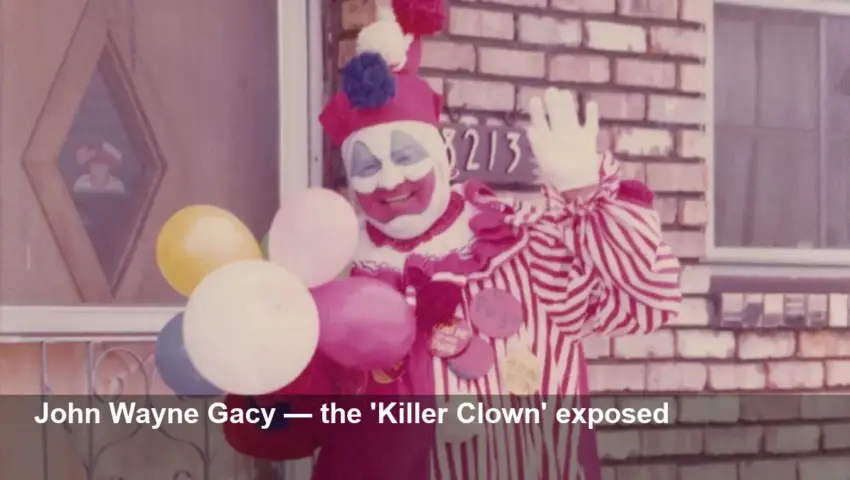
- John Wayne Gacy, known for performing as a community clown, murdered at least 33 young men.
- An ITV drama, Devil in Disguise, examines police blunders that allowed him to continue killing in 1970s Chicago.
- Gacy had a prior 1968 sodomy conviction and other arrests, yet suspicions were not fully acted on.
- His attorney fears there could be as many as 20 more victims who will never be found.
H2: New ITV drama reopens questions about missed warning signs
A new eight-part ITV drama, Devil in Disguise, revisits the case of John Wayne Gacy and the series of investigative failures that let him prey on young men across a Chicago suburb in the 1970s. The programme focuses on how community standing, misjudged assumptions and missed opportunities allowed Gacy to remain free despite mounting concerns.
H3: Gacy’s public persona and hidden crimes
At first glance, Gacy appeared to be a model community figure — he dressed as a clown at charitable events and hosted large garden parties. Behind that façade, authorities later linked him to the murders of at least 33 boys and young men. The scale of the crimes and the contrast with his public image have long made the case one of the most notorious in American criminal history.
H3: Prior convictions and earlier allegations
Records show Gacy had been jailed in 1968 for sodomy involving a 15-year-old boy. He was also arrested on two further allegations of sexually abusing young men in 1971. Despite this history, police and community leaders continued to view him as an upstanding resident, a perception the ITV drama suggests helped shield him from scrutiny.
H2: Investigations, missed leads and the turning point
Investigators later learned that several of Gacy’s employees went missing beginning around 1975, but police did not search his home for another three years. Detective Rafael Tovar began probing the disappearance of Robert Piest in 1978, and that inquiry led to connections between past complaints and the pattern of missing men.
H3: Runaways and families who pushed for answers
Some of Gacy’s victims were runaways and were not immediately reported missing, while other parents did press detectives for action. In the series, Rafael Tovar — portrayed by actor Gabriel Luna — defends earlier investigators by noting that most missing young people at the time returned home quickly, complicating police prioritization.
H2: Unanswered questions remain
Gacy’s attorney has warned there might be up to 20 additional victims who could never be found. Police excavations and searches in later years have recovered victims’ remains, but the full extent of Gacy’s crimes may never be known. The ITV drama frames the case as both a tragedy for the victims’ families and a cautionary tale about institutional blind spots.
H4: Why the story matters now
Devil in Disguise aims to spotlight the human cost of investigative errors and to remind viewers that community reputation and assumptions can delay justice. For families still seeking closure, the series renews attention on how systems failed and what might be done differently going forward.
The case of John Wayne Gacy continues to provoke debate about policing, victim vulnerability, and how high-profile offenders can hide in plain sight.
Image Referance: https://www.thesun.co.uk/news/38058187/crazy-clown-killer-sickening-spree-police-blunders/