
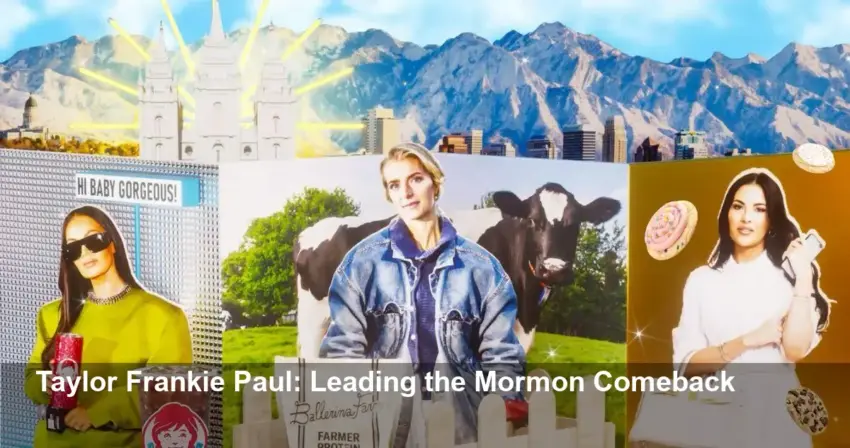
- Taylor Frankie Paul is credited with helping trigger a “second Mormon moment” in mainstream pop culture.
- Utah influencers, reality stars and entrepreneurs are moving Mormon representation from niche to prime time.
- Media like Hulu’s reality shows and high-profile influencers have turned private Mormon life into profitable visibility.
- The trend blends social media, commerce, and reality TV, reshaping how Americans see Mormon communities.
H2: A second Mormon moment arrives
Mormon visibility in American pop culture has shifted again. After years of being stereotyped or relegated to niche portrayals, a wave of influencers, reality personalities and entrepreneurs from Utah are reshaping the narrative. At the center of the newest surge is Taylor Frankie Paul — set to appear on The Bachelorette — whose mainstream profile signals how Mormon life is moving from curiosity to prime-time fodder.
H3: From local influencers to national attention
Local business owners and creators in Utah have converted their lifestyles into content and commerce. Salon owners, clothing brands, and lifestyle bloggers — many from tightly knit Mormon communities — now reach national audiences. Television series and streaming reality shows have amplified these figures, turning personal stories and family-centered branding into lucrative platforms.
H4: Reality TV and influencer culture intersect
The convergence of reality TV and social media has been a key engine. Shows that once treated Mormon characters as outsiders now feature them as protagonists whose religious background is part of, but not all of, their story. Taylor Frankie Paul’s Bachelorette casting is notable because it places a Mormon-identifying figure squarely in mainstream reality dating drama, increasing visibility and sparking conversation about faith, identity and public performance.
H3: Economic and social impact
This second Mormon moment isn’t only cultural; it’s commercial. Many Utah-based creators monetize family aesthetics, beauty routines and faith-adjacent values. Their followers translate into sales for product lines and regional tourism, while national media profiles invite endorsement deals and new business opportunities.
H4: Nuanced representation matters
While increased visibility offers opportunities, creators and critics note the importance of nuance. Simplified portrayals risk flattening a diverse faith community into archetypes. Several influencers and local leaders argue for stories that acknowledge both cultural specificity and personal complexity — not just the tidy, marketable version often packaged for mass audiences.
Embedded social post
Instagram: Rachel Parcell — https://www.instagram.com/rachelparcell/ (example of a Utah influencer who helped popularize the lifestyle aesthetic tied to this moment).
H2: What’s next
Expect more Mormon-origin creators to cross into mainstream TV and streaming projects, and for established reality franchises to keep tapping that audience. Taylor Frankie Paul’s upcoming role on The Bachelorette may accelerate interest and spark broader debate about how religion, commerce and entertainment intersect in contemporary American culture.
As the second Mormon moment unfolds, it will likely keep evolving — driven by creators who transform private life into public narrative, and by audiences who respond with clicks, subscriptions and purchases.
Image Referance: https://www.thecut.com/article/mormons-pop-culture-secret-lives-bachelorette.html